
17 Jul Simplifying Consent & Compliance with Alexander Goller
Simplifying Consent & Compliance with Alexander Goller
17th July, 2022
As a proud media partner of WordCamp Europe 2022, we had the chance to sit down with Alexander Goller for an insightful conversation about their journey, ideas, and the future of WordPress. This episode captures the moments, thoughts, and stories that stood out. Here’s our full chat – enjoy reading!
All right, ladies and gentlemen, this is your host, Vineet Talwar, back again from WordCamp Europe, live from Porto. And today we have our guest Alexander Ker. Hello Alex. Alex, welcome to the show
Well, thank you for having me.
So, Alex, when was it that you entered into the world of WordPress, and what motivated you?
I started using WordPress about 14 years ago. And, in the process, you know, you want to change things in your themes and plugins, and so I started developing a bit, and then I had a job in an agency for, like, 6 years. And I started freelancing 7 years ago as a WordPress developer, as a freelance developer.
Oh wow. And you also organized a few word camps, right?
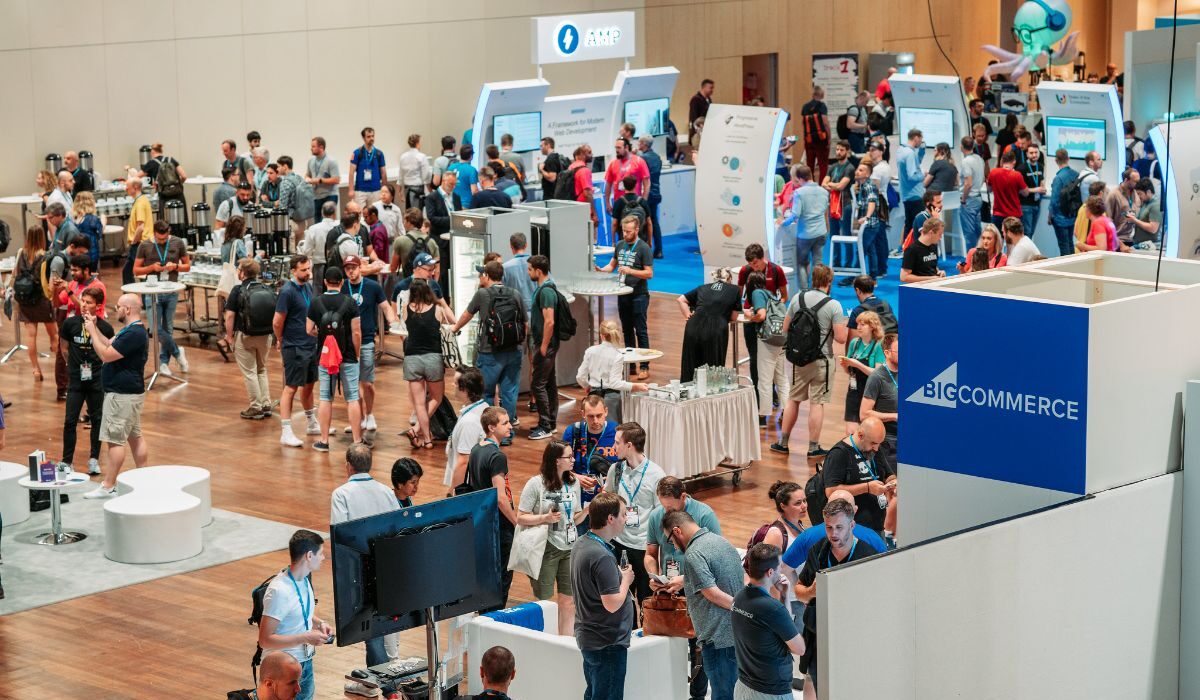
Yes, I got into the WordPress community in Berlin, and I went to the meetups, and after a while I noticed that it’s volunteers doing all the work, and I was like, “I was eager to.” To get into the community myself or to provide work for it. And so I helped with some of the meetups in Berlin. I then organized a local work camp. I co-organized a local work camp in Berlin, and then also I was on the organizing team for the Work Camp Europe 2019 in Berlin.
Oh, I was there too.
Very nice. I hope you liked it.
Yeah, it was nice. The concert was also great.
Yeah, the after-party is really good.
All right, so, So, Alex, you said you’re a freelancer. So what kind of projects are you into, or what would your day look like as a developer?
Yes. I mostly focus on the PHP side of WordPress at the moment. I’ve done full websites in the past and did all the front-end work as well. Currently, I’m mostly interested in plug-ins. Optimizing deployments, improving the code for plug-ins, ensuring the performance is up to par, things like that.
All right. All right, so, Alex, we saw on Twitter that you rode a bicycle 2,700+ kilometers toward Camp Europe in Porto. 2700. I mean, that’s a big number. What was your motivation? I mean, wow.
Well, thank you very much. the motivation is mostly was that I like to ride bikes. I’ve never been on a bike ride this long. I think the longest I’ve done before was like 4 or 5 day trips, like 700 kilometers. Wow. And this time, I just thought about the possibility to take the bike across Europe, to go to nice places in Europe and see Europe from a different vantage point. being on a bike, just takes you down totally different roads than being on a car or taking the train or flying somewhere, and it obviously also takes a lot longer. So I was riding my bike for 29 days, and as you said, 2,700+ kilometers, So I averaged around 100 kilometers a day, which, depending on, on the, if it was mountainous or not, I was like, 7 to 8 hours, I guess a day, including breaks. What I started in Germany and took a train across the Alps, and so I actually started riding the bike in Verona to Porto, and it was 40 days before the work camp started, and I didn’t have a particular set route or places to be, so I always just rode my bike on the days I wanted to, as far as I wanted to, and Usually I looked for accommodation like late in the afternoon and found a hotel or a place to stay for the night. so that was also really interesting to just not have a plan and not have places to be, and I tried to keep my client meetings, so I was working on the road, and I tried to keep my client meetings to say one day, so I could bunch them all together and have them in a rest day. and then on the other days, as I said, just not have a plan, just not, not have places to be, not have to stick to a schedule, was like, If the sun was out, it was fine to ride a bike.
And sometimes things are better when there’s no plan at all.
I totally agree. I love not having a plan.
Guys, you heard him. Sometimes it’s good to not have a plan. And that’s, that’s good Yeah, and you don’t have to be anxious about it. No. All right. So, when you start, OK, you started the journey 40 days before, but before that, how did you plan this journey? Did you look for the routes and stuff like that? And what was your thought process about the planning?
Yeah, I mean, I obviously looked at maps, and I looked at a at a few potential routes I could take. I had like an average distance in mind. I knew there was going to be like between 2500 and 3000 kilometers, depending on which route I take, I divided those up into days and just averaged out how much I needed to go in a day. To be honest, there was not too much planning involved.
So, Alex, there must be some bad days in between. What I mean by bad days, it may be some hard situations or bad weather, I don’t know, some roads being closed or Google Maps showing you wrong direction. How did you handle those bad situations? Because I, it’s a long journey. One mistake is 100 kilometer detour, maybe.
Yes, actually all of those things happened. Now that I’m looking back on it, I was really lucky with the weather overall, But obviously I get rained on twice, I think I got soaking wet, it rained so much I didn’t even have the time to unpack my rain gear, and it was just wet. The most difficult thing for me was headwind. when I rode through Spain, I had 34 consecutive days of just headwind from the west, and I was riding on a plateau, and this The roads were just going straight west, so I rode into headwind all day long, and I mean it is a you didn’t wanna oh my gosh. So going into a headwind for a long time is physically taxing, but for me the biggest part is the mental side of it. you have to be constantly peddling; you have to be like you. You’re not as fast as you want to be, and you put in so much effort, and you don’t really see the results, and it really. After 34 days, it really gets to my mind.
But how did you keep calm? And like, I have to get going.
Yeah, I mean, basically that’s it. Like if you’re in the middle of nowhere in Spain, there’s no water around, there’s no food around, and it’s just windy. You just want to get to a place, so you know that the next city, whatever it is, is going to be like 50 kilometers away, and you just push through; you just get there.
Wow, that kind of motivation I needed in my life also.
Well, if, if you’re on a bike, it comes to you easily. Yeah, I, I think it’s a good biking usually is a good metaphor for life, and I mean you have ups and downs, you slow, you’re fast, you have good days, you have bad days, and It, I think it generally helps with the motivation and being like focusing on one thing and actually pushing through one thing to get it done.
You’re right, life is like a bicycle as well. Some days are good, some days are bad. That’s an amazing metaphor.
Well, thank you. I had a lot of time to think on the bike.
So biking makes you think a lot, or, I know, yeah, because you have a lot of time to think. I get it.
Yes, and also, I mean, no day was like the other day. Some days I listen to podcasts and music while biking; some other days I did not at all, and I was just thinking all day and sometimes there’s a political thought, and sometimes there’s a problem to solve, so yeah, you have a lot of time while your mind is not really engaged, but your body is engaged, so you also try to engage the mind or the, the mind, the mind engages itself in things.
Absolutely. I mean, I, I also do biking a lot and this time, I gave up my mountain bike to my brother and I got a, another one city bike and. Yeah, I, I, I’m also, I also started enjoying it in the streets of Frankfurt. You’re right, biking makes you a thinker. Yes, I totally agree. All right. So during your bike journey, I mean, did you plan your stay in advance or did you do it also on the go, like wherever the city is coming or whenever the night is approaching, you’re looking for a place, stuff like that.
I did everything on the go. there was no planning. I did not want to have the pressure of having to be, in a certain city at a certain time. And, initially I thought that I’m going to, go around the Pyrenees on the Atlantic coast, so to the west. but then while I was in France, I changed my mind and went around, on the Mediterranean coast, so to the east, and if I had booked some accommodation on the Atlantic coast, I would have had to go there. And so that was the good thing about not planning ahead.
so that you could plan on the go and yeah, that, that totally makes sense. But you you had difficulty finding the places in some days.Generally, no. I think the time of year was pretty good for something like this. So, most of the trip was in May. I think there are no like major summer holidays or school holidays anywhere in in Europe, and so not many tourists, and I was also going through remote places a lot, like where you have one, maybe two hotels in like in a smaller city, and yeah, generally it was not a problem to find accommodation for the night.
Awesome. So after 29 days of biking, when you finally arrived in Porto. How was the feeling?
I mean, obviously I was happy. I was relieved; I slowly was like, I did this, I did not like I cycled the whole way from Verona to Porto, and so. I don’t like to use the word pride, like I wasn’t proud of myself, but I was very happy that I had actually achieved it. the weather was not the best in Porto on the day I got here, so unfortunately it was gray and rainy, Yeah, they, they kinda, they kind of dampened the mood a bit, yeah, but relief, my, my bike he held up. I did not have any major mechanical problems, my body held up, so that was good. I did not have any injuries,
Thank God.
Yeah, thank God.
And we’re able to see you. Yeah. All right, so are, are, are you also planning to bike back or?
I once again don’t really have a plan, I think I’ll do a combination of trains and biking back to Germany, but I think I’m gonna spend my summer on the bike in Europe. I mean, obviously I have to make sure that I’m not in like the hottest places. I think some regions of Spain, for example, are going to be really hot in the summer, and then it’s hard to carry that much water on a bike, for example. But yeah, I think I’ll slowly make my way back to like northern central Europe again.
Guys, if you spot him on bike, say hi and also support him and cheer him up.Yeah, thank you very much in advance
And which city you’re going to in Germany?
so I, I don’t have an apartment at the moment. I live a nomad life.
Oh, that’s awesome
yeah, so in this summer it’s a nomad life on the bike, My, my home base, so to say, is, in a city, called Ingolstadt. it’s near Munich, so in the south of Germany.
Ingolstadt, I, I know that city. All right So now since you’ve arrived here and you’re attending Word Cam Europe, I think we are sitting at day 3, the last day. how did you, how do you find it so far
It’s very good. as I mentioned before, this is, I think, my 5th work in Europe. I have made many friends over the years, and, it was really good to see these friends again after such a long time. I mean, the WordPress community is so welcoming and, so many. Very nice, pleasant people, so I think that’s usually the the. The most happy, can I do that again? The workpress community has so many pleasant and nice people, and I really enjoyed seeing my friends again.
That’s awesome. All right. So my next question is, you have been to many word camps. You have been organized a few. tell us how things have changed over time in the community as well as in word camps.I think one thing that has changed or is changing, is the, the monetary side of it. the events just keep on getting bigger. I can’t put numbers on it, obviously, but I, I don’t have the numbers, but it feels like everything is becoming more professional. If that’s maybe the, I don’t know if that’s the correct word, but there’s definitely more money. The venues are bigger, it’s like very central venue, I don’t think the community as such is changing, It is a very welcoming community, and I think a lot of people work very hard to keep it that way.
You’re right. And what is the one thing that you love about WordPress?
Oh, it definitely is the community. I mean, I do work a lot with WordPress as a developer, and I like the ease of it. I think it’s one of the easiest software to adapt to basically any need you have, that is great, but The software would not be important to me if it wasn’t for the community, so the people in and around WordPress make WordPress.
WordPress. You’re right. People in and around make WordPress. I mean, we saw it on contributor today. There were 800 people sitting there just contributing to this beautiful software and that scene was awesome.
It was, and I really like that they’re new tables every time. So this this year I contributed to the Open verse table or I I joined the Open verse table, which is a new team in WordPress. So that was their first appearance at a at a work camp.
What was that about? Can you tell us?it’s a Creative Commons media search that got Acquired by WordPress, it’s, it’s now part of the WordPress family. So you can go to WordPress.org/openverse and have a search engine for Creative Commons licensed media, so photos, audio, I think also video.
Awesome. All right. So, what is the one thing that you would suggest to the user or a developer who just entered to the word of WordPress?
I guess to get in touch with the community, find a local meetup, find the people around it, get help if you have problems. there are many people eager to help, and after a while, or if you’re good enough, also give help, pass on your knowledge. I think that’s what makes us all better and stronger.
All right, so, And let’s talk about our next segment of this interview, which is life outside WordPress. So what do you do things that are not WordPress or what do you do other than WordPress?
yeah, I mean, I bike a lot, of course, yes, up until now, those two activities were not really, connected, I guess by biking here and by being on a podcast and talking about biking to a work camp. I have connected those. I mentioned before that I live a nomad life, which hasn’t been the easiest in the pandemic, obviously, but, so I travel a lot. I’ve spent some months this year in Mexico before coming back to Europe. And so I, I like the traveling part, I like having meeting friends all over the world and seeing different cultures.
That that’s really awesome. All right, so since you’re a developer and all of us developers get stressed a lot whenever the project is not working out, or maybe a client is not or unmanageable sometimes, let’s call it that way. How do you de-stress yourself for such situations?
I think the obvious answer to this is go on a bike. But, but I think, I mean, it doesn’t have to involve a bicycle, but any physical activity, for example, anything that, is completely different than the problem you’re trying to solve, and even if it’s a communication problem, usually helps you think about and maybe solve that problem. So if it’s If it’s running, hiking, or any other, any other non-tech, non-computer related activity, I think for me helps. Getting better at the tech side of things.
All right. So we are almost at the end of this. So our last question, or as we call it the Easter egg, what is your favorite song?My favorite song, umm. I like, I like so many different types of music and I don’t think I have one favorite song in my life, hold on. A song that that was sorry. One song that really helped me get through some of the mountains on my cycle ride was Bombreck by Rage Against the Machine. So I’d say currently Bomb Track is my favorite song.
Awesome. So guys, we’ll try to put that link in the description so that you can listen to it. thank you for being part of the show. It was lovely hosting you and we really had fun.
Thank you for having me. Thank you so much.
All right guys, till next time.
Listen to the audio podcast and other audio podcasts here.
Meet the Host
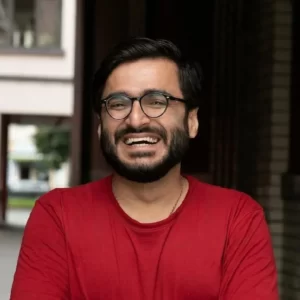
Vineet Talwar is the founder of Some Tech Work, a Germany-based digital consulting studio, and the creator of Jump.ac, an AI-powered EV fleet charging platform built through the Carbon13 accelerator. When he’s not building products or fixing websites at scale, he’s usually experimenting with new tech ideas or polishing his next WordPress talk.
Meet the Guest
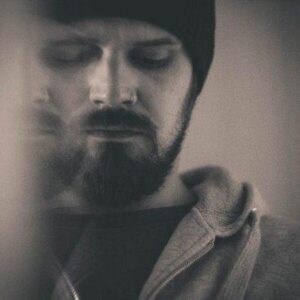
Alexander Goller is a privacy and compliance specialist known for helping businesses navigate the fast-changing world of data protection, consent management, and digital compliance. Whether advising teams on GDPR strategy, improving transparency tools, or shaping privacy-focused workflows, Alexander’s work centers on making complex regulations accessible and practical for real-world use. He is an active contributor in the WordPress and tech communities, regularly sharing insights on responsible data practices and the future of a privacy-aware web.
Sorry, the comment form is closed at this time.