
15 Jul Sean Blakely on WordPress, Career Growth & Leading Technical Teams
Sean Blakely on WordPress, Career Growth & Leading Technical Teams
15th July, 2022
As a proud media partner of WordCamp Europe 2022, we had the chance to sit down with Sean Blakely for an insightful conversation about their journey, ideas, career growth & leading technical teams. This episode captures the moments, thoughts, and stories that stood out. Here’s our full chat – enjoy reading!
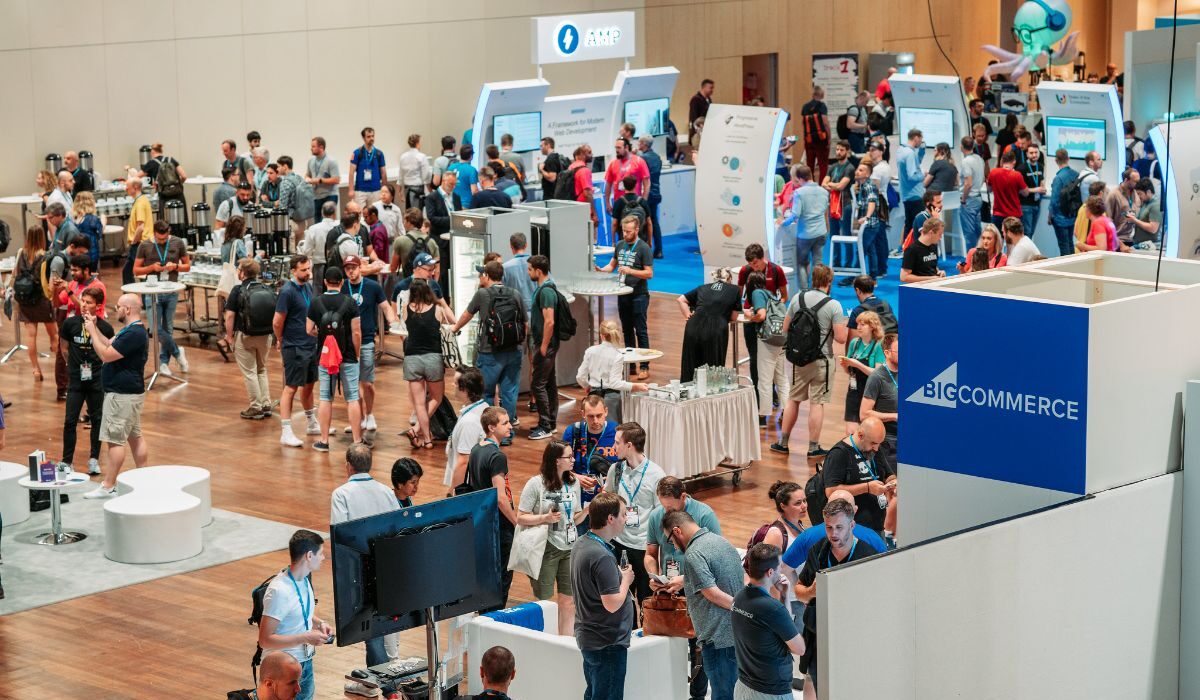
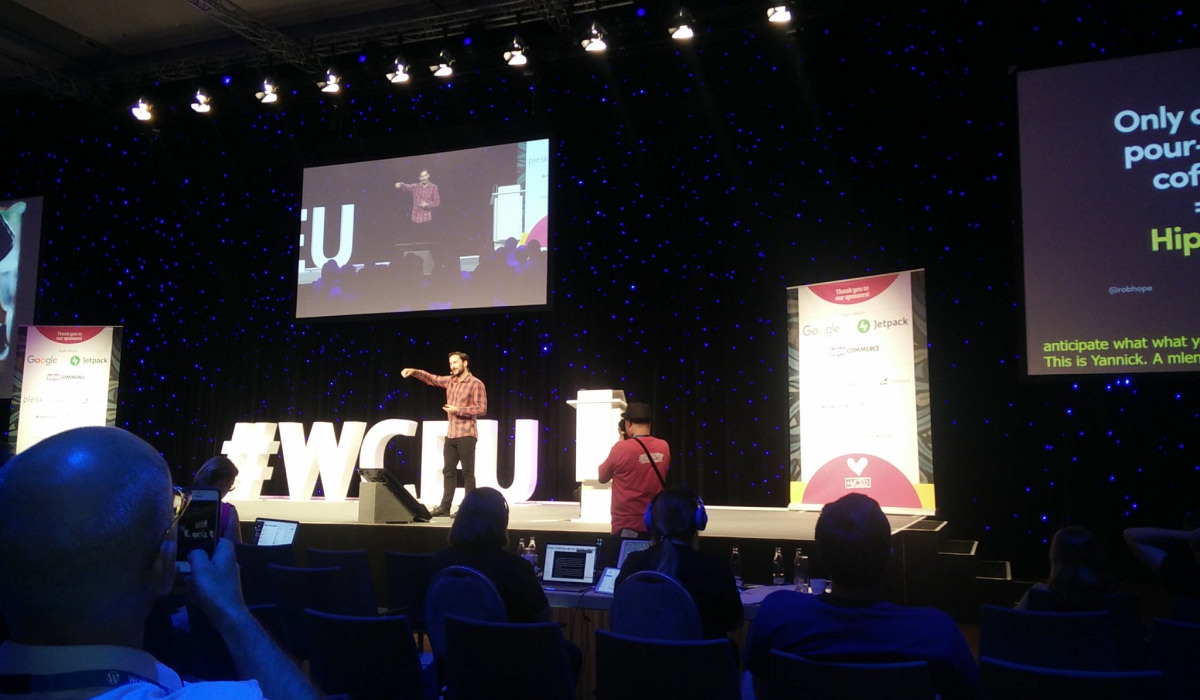
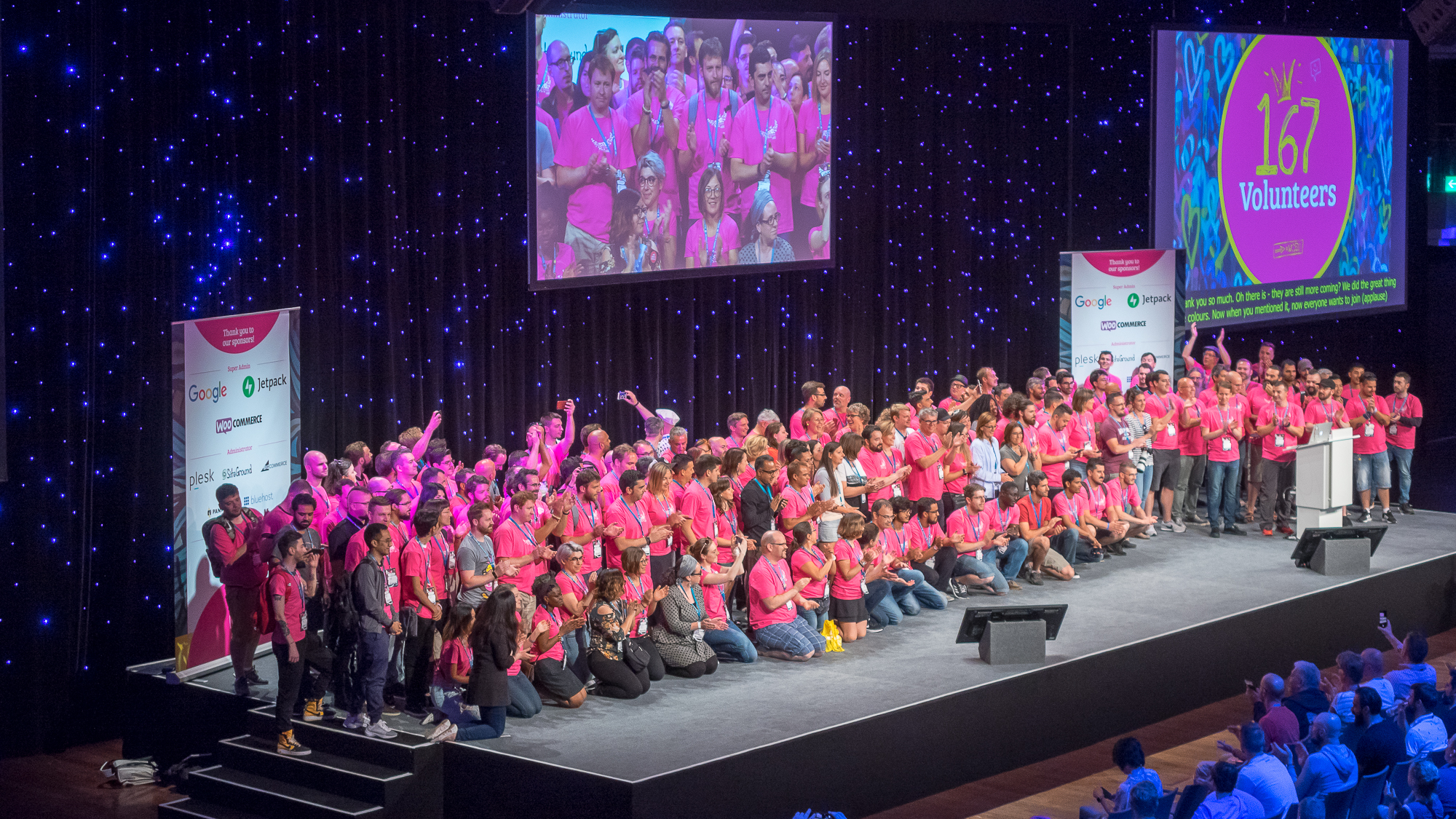
Hello everyone. My name is Vineet Talwar, and we are back from World Camp Europe in Porto, which is happening finally after 3 years. Yes, it has been 3 years since Berlin happened. We are now sitting at episode 3 with Sean Blakeley from the UK. Did I say your name right?
You did it perfectly. Well done.
So Sean, we will go on and on and talk about you. We’d like to get to know you, and please introduce yourself.
OK, so my name is Sean Blakely. I’ve been working with WordPress now since 2006, would you believe? So that’s a long, long time, so I’m now with a company called American Eagle. I’m the technical director at American Eagle. American Eagle is a 700-strong agency, so a huge agency. They run a number of platforms, including Sitecore and Sitefinity, but WordPress as well, and they tend to do enterprise-level engagement, so big integrations, you know, sort of big digital transformation projects. And so it’s a really exciting space to be in with WordPress, where we’re using WordPress for these very large projects, big, interesting, and often very unique challenges. So it’s an incredible place to be and an incredible journey to Beyond. And I feel from that 2006 start where I was a blogger among many and using WordPress to create very simple sites. I’ve been on that incredible journey with WordPress, where now I’m solving million-dollar problems and huge integrations. So it’s been an extraordinary journey for me with WordPress, and I’ve thoroughly enjoyed it and am looking forward to the next chapters I will have with WordPress.
That’s, that’s perfectly awesome. So , how’s your current role look like at American Eagle ? I mean, what is your day-to-day stuff?
So, as the technical director, I’m overseeing the enterprise WordPress team within American Eagle. So I’m helping to grow that team. Also introducing our sort of agile practices, so ensuring that we’re working and our ways of working are as efficient as possible and really exploring the boundaries of the technology that we have in the current WordPress ecosystem. So at this conference, we’re going to hear all sorts of exciting things about Gutenberg, of course, that we’re all aware of, and block patterns that we may talk about in a moment that are beginning to sort of, you know, become a critical part of WordPress. But then there are all sorts of other initiatives that are within the WordPress platform, and it’s really my role to keep our team ahead of the curve in terms of some of these new features that are happening within WordPress. But also, and I think this is possibly the most critical part of our journey, it’s really looking at the direction of travel, where we’re going, both as a team and as a community. And so looking at things like composable architecture, where WordPress is one component of a kind of larger ecosystem, where we’re bringing in other microservices, other, you know, other suppliers. As providers, to ensure that we can achieve at scale these sorts of large projects, it’s big; it’s a big undertaking with lots of different moving parts to get the team focusing in on those big custom challenges that we have.
And what your process looks like to realize any project at American Eagle.
So that’s a fascinating question. Being the scale that we are, there’s no one size fits all. So there’s a number of different directions that those projects can come from. Often because we’re platform agnostic, although we have preferred platforms, of course, but we’re platform agnostic. So, sometimes it will start even, you know, we have a problem, we are, we need a digital transformation, or, you know, we have these challenges within our business or objectives that we’re trying to hit. Yeah, how can we move forward? And sometimes the question is as open as that. So, as the agency, we’re more consultative, where we’re talking about platforms, maybe directions of travel, and where that could go. So that’s happening before we’ve even selected WordPress or considered what platform that we’re going to move down to. Now, when we do talk about that with clients, when we start to define what that project is going to look like, we then move into a really critical part of the process, which is that discovery. That discovery and definition are really where we’re trying to understand and get the clients to articulate their problem. We want to hear their language, their sort of what we would call the domain language, where we’re talking the same language as them, understanding the problems and the objectives, and the goals that they’re trying to achieve. Now what’s really important about that discovery process is we’re not trying to pretend that we’re going to capture everything in that, you know, be it a 3-hour or 3-day session; sometimes we’re not going to capture everything. And this is a critical part of doing WordPress at scale, or indeed any platform at scale, that you’re not going to capture all of their needs in that one moment. What you’re going to get is a snapshot of what they want, the kind of snapshot, and the direction of travel for that organization. And so with that in mind, as we sort of educate the clients about emergent complexity, what actually happens is through the project, we start to learn where what we call the sort of gotchas, the gremlins, like where those problems are, things that maybe we didn’t predict were going to be problematic, arise through the engineers as they dive deeper into the challenges. So we find that something is more problematic than maybe we had predicted or perceived. So, Helping the clients to understand that, you know, complexity emerges and that those challenges really come into focus as they become closer is a critical part of our process, because what that then enables us to do is manage our client’s expectations. So, they understand that this is a journey, and they have a role in this journey. They don’t just sort of tell us what they want, and then we go away in 6 months’ time; we sort of da-da and are like, “Here’s the solution to your problems.” You know, it’s a collaboration; it’s a piece that we do together. And I think that’s, yeah, that’s the critical part, and the most successful projects are where the client leans in and really embraces their role and recognizes that it is a collaboration between the technology partner and the client partner.
All right. So, this, this, gets me one question. OK. One question that comes to me now. So we all had those clients; we were like, “Hm, something is wrong.” I don’t know what that is, but something is off. How do you handle those situations?
So, don’t let it linger. Be the first; the first rule is that you need to find out what it is. Because, you know, it might, as is often the case, start small and then expand and become a critical issue within a project. And so, what we need to do is validate to test, because what you’re talking about is, you know, it might be—is it a gut feeling? Is it? Have you had a slightly odd email? Maybe people have stopped turning up to those client meetings, those weekly check-ins that you have. These are all warning signs. These are all things that, as you say, make you feel like something’s off, something’s not quite right. The energy isn’t there from the client. Exactly, we were talking about before, they’re not leaning in, you know, they’re not taking on their responsibility. And so we do all sorts of things to then validate that. And the obvious thing to do is, well, we want them to lean in. Let’s start from our goal. What are we trying to achieve here? And, and if it is that they’re not showing enough contribution to the project. We start to push more deliverables that way; we start to ask the client to produce maybe some documentation, maybe some things around the project, maybe we want to bring other voices into the sort of discussions of the stakeholders in the project. You know, often we’re talking just to marketing, so maybe we want the CTO to come in, you know, maybe we even want some of the C-suite to come in. You know, it’s, it’s often if you’re having a problem with an individual, and let’s remember, you know, the, the human variable is there in all projects, and it’s something that we always have to be aware of. Often broadening your stakeholder group will help to alleviate some of those misalignments. But, you know, again, there is not a one-size-fits-all solution to these problems. And what we need to do is respond to the feedback that our clients are giving us, you know, seeing the patterns that we’re seeing in those communications.
All right , so you have a talk also coming up . And the block patterns revolution . Could you please talk a bit about that, what you plan to do?
Yes , so block patterns , for , for anyone who hasn’t come across block patterns , they are a deceptively simple way of grouping , , Gutenberg blocks together . And , and in fact , they really are as simple as that . They are a kind of container , , for blocks , but that is deceptively simple . And what I’m going to talk about , , on the stage at Wordcamp is talking about how we’re now folding block patterns into our creative process . So , and particularly in the way that we merge , , developers and designers and the way that they contribute to projects . So , what we’ve often found and , and I will talk about some of the challenges that we’ve had over the years , but what we’ve often found is that You have a big design , , phase , like a big design period , and then you move into a development , that sort of build phase . And that’s often stepped , it’s a kind of waterfall by design , if you like , where you’re sort of moving from the design phase into that development phase . Now , what we’ve found and we’re exploring and experimenting with at the moment , Is that block patterns helps to sort of address some of those challenges that we faced in bringing designers and developers together to enable them to collaborate and to work together in the same platform . And so moving away from that big design phase and then big build phase , Ste . To merge the two , what Dan Mal calls the kind of hot potato process , where hot potato , where the designer is throwing a hot potato to the developer and then throw it , he or she is throwing it back and then , and it’s , it’s that notion of , you know , almost like a dance , yeah , like a waltz together . And what’s fascinating about this is if you’ve ever been like a designer or developer , if you’ve ever been a freelancer . You’ve done this effortlessly . You’ve probably done this over the course of a cup of tea or coffee . You’ve done a bit of design and maybe you did a bit of PHP and maybe even did a bit of SEO all in a single cup of coffee . But it’s really hard to scale . It’s really hard to do across a team . And it’s really hard to do on large projects . And so that’s where kind of block patterns is , and this is where we’re exploring is block patterns really helping us to start to encourage that collaboration . And the way that we do it is where before creating custom Gutenberg blocks might be many hours , many days even before , block pants enables us to create very rapid UI components . I mean , minutes , we are creating complex UI components , and that’s an extraordinary journey . When we think about , if you’ve been in WordPress as long as I have from You know , tiny MCE and through shortcuts and all , you know , all the other things that we’ve explored . And yet here we are with a a a drag and drop interface . It’s an extraordinary distance that we’ve traveled together .
Yeah , it’s , it’s incredible actually . The first time I looked at the bird , it was pretty bad , but now it looks beautiful and it’s flawless . And it still has a long way to go . I’m sure the weather is gonna be more beautiful than it is currently .
I think you’re , I think you’re absolutely right . But for me , it’s , it’s not just our experience as technologists or or site builders . What’s incredible is for editors , like the pleasure of using an an intuitive wizzy wig interface . You know , no longer do they have this kind of changing drop downs or changing values in , in the back of WordPress and in that leap of faith as they kind of hope something changes on the front end . Now they can see those changes live into into WordPress . It’s , it’s an extraordinary place that we’ve got to , and as you say , continuing on that journey .
Absolutely . I mean , PageBuilders already started there , but now Gutenberg is taking it to the moon .
we’re putting crypto reference here to the moon .
All right . So let’s move on to our next question . So , , What is the one thing that you love about WordPress ?
So I think they , that might . my greatest love of WordPress has to be the flexibility . I think , as , as we’ve mentioned a moment ago , the kind of journey , the distance of travel , , that I personally have been on , , with WordPress from very small sites to now , huge headless enterprise , , architecture and ecosystems . That’s an extraordinary distance . And there’s , I suppose there’s there’s two commonalities . I mean , of course , it’s , it , it’s a journey that I’ve been on , but WordPress is Be there at every step . WordPress has enabled this journey to happen by evolving and changing and making more things possible . And what’s extraordinary is that it can still do all the things that it used to do . It can still be a small CMS , a blogging platform , an intuitive interface to create a simple website . But now it can also do this extraordinary , headless implementations at huge scale for huge brands . I mean , world renowned brands are now using WordPress as part of their stack , as part of their technology . That flexibility is extraordinary . There is not another platform on the planet that can offer that kind of flexibility . It’s , it’s truly unique .
Absolutely , we are like 40% strong as we call it .
This is very true . Yes . Whether that fluctuates a little , you know , up and down a little , but , yes , that’s an extraordinary number , extraordinary endorsement .
Abs yeah , like , , the if I’m , if I’m not wrong , correct me if I’m wrong . So the correct metric is 40% of top 100 million sites , or is it like 10 million sites , the metric of that we say ,
I can’t , is it the top 100 , I think the top 100 , I , I can’t remember too and when and the source , I can’t remember the source either , but it was , it’s easy to find a little , a little Google and it’s easy to find .
Never mind . Alright , so , OK , another question is about your work as well . So , I’m sure you must have like fire situations as we call it , like , maybe about the servers , maybe about the client . So , let’s use the word , general word called fire situations . How do you handle fire situations at your company ?
So , , fire situations are , you know , there’s , there’s an intensity , there’s often an an some level of emotion as well that’s involved , we have to tread very carefully . , I’ll , I would answer this question just momentarily with a , what’s critical and what we’re very careful to do within the team is to spot these fires early and indeed , if we can spot the fires before they , you know , spot the smoke rather than the fire , and start responding with mitigation for those , , for those areas , you know , for those potential issues . So that sort of premeditated , that like prediction of where we’re going to face challenges is really important has seen us avoid these these potential traps or pitfalls many times . However , you know , sometimes issues do arise , and they’re issues that we do need to address . And what’s really important is that we’re honest and transparent as quickly as possible . , so let’s take an example of maybe , , we’ve , , we’ve had a deployment issue , , maybe something hasn’t been deployed correctly . And so what we do immediately is to rectify the , the issues . So we , yeah , we immediately focus on solving that problem . But then what’s equally as important is we then investigate what , what the causation was , what was the problem , what was the ultimate cause ? And indeed , what was that audit trail , you know , what did people do ? What were those actions that are taken ? Because of course , as we know , when people are under pressure , when they’re , you know , there’s a problem and people are trying to do the right thing . They can often make a mistake in that moment , because they’re maybe not following correct procedure or they’re not , you know , they’re not pausing , because they’re trying to solve the problem as quickly as possible . And so trying to get people just to take a breath , just to to pause , to think about the problem as a whole , we find often solves . , often stops the problem spreading for , you know , deployment issue , and there may be a media issue , and then maybe we can have a data , but you know , it , it can spread when people take actions where they’re trying to solve the problem , but actually they can often be exacerbating or or making it worse . And so taking that moment to pause , and then reviewing what we do , what we’ve done , and say reporting back to the client , we often create an instant rapport . We talk through those , what we’ve done , what we could do better , and it’s important to be very honest and transparent . Technology is hard , you know , and it’s , it’s , it’s moving target . And so we will always make mistakes because we are , we’re a human variable , you know , and particularly as you get very large implementations or very complex sites , there are so many moving parts that no amount of , well , your coverage of unit tests or regression tests , there will always be things there that maybe you haven’t perceived or outlier issues that maybe you hadn’t foreseen . And so , being a little gentler on yourself that , you know , these are , there is a human frailty , there will be problems . And so , being honest , being transparent , you know , not trying to hide those problems is really important . It’s really important for that wider partnership because what we do is , we then build trust with those clients , because they know that we are fallible , we do make mistakes , but then we’re very honest and we’re very transparent about rectifying it .
Awesome . And let’s talk about the platforms you , you are running . So , can you tell us a bit about what these platforms are , , Sitecore , Kenttico , and Kentigo .
So , I’ve specialize and focus on WordPress . So you’re quite right , there are other platforms . Sitecore is a big enterprise platform . , it’s become in recent times a composable platform , which is a very interesting kind of change to their architecture , Sitecore 10 . . They’re becoming more modular , kind of opt-in modules around personalization and , you know , sort of all all sorts of other areas of the , of the site . , Kentao is , is probably somewhat smaller , but , you know , , , a similarly sort of , you know , an enterprise ready platform . And that’s American Eagle is , is focused on , and we also have our own tools and own CMSs that we’ve built internally . , but that what the commonality is that they’re all , they can all be used at large scale . , almost all of the platforms that we’re involved with are , are available for scale .
All right . So , since we are almost at the end of the interview , we have like a couple of questions left . One is , how’s your life outside WordPress Word ? Like your , what you’d like to do in your free time ?
So I have a terrible garden , which causes me no end of headache as the plants either don’t grow and wither in a corner or go crazy and take over the whole garden , but I , yeah , it’s hours of pleasure and I , I’ve often They often go in tandem , where , as you know , you know , this can be a very stressful , , working environment at times , there can be very high pressure for high profile clients or on projects . And it’s a wonderful escape to go back to what is essentially going back to nature or my little bit of nature , , and having fun and trying to keep my daughter away from destroying bits of the garden . So that’s , that’s really , that’s a , it’s a great pleasure and I’ve thoroughly enjoy going to the garden .
That’s , that’s really nice . I mean , nature is the best escape one can never have , in , in my opinion . OK . So , last question of the show , , the episode . What is your favorite song ?
What is my favorite song ? That’s an excellent question . So I , this I’m sure changes . If you ask me tomorrow , I might give you a different answer . But the first song that I think of as my favorite song is Pixies Debaser . There’s something about the energy of that song that it’s , it’s that kind of perfect 3 minute . , pop song that just encapsulates everything , I think , and I think maybe it was a moment in time where it was just full of memories and just a , a joyfulness that is hard to match . And I , I think if ever I have a , a single song that I take to a desert island , that would be the one .
That’s an excellent choice . Thank you so much for being part of it . It’s lovely hosting you .
Wonderful . I thoroughly enjoyed it . Thank you .
All right , guys . So till next time , and bye-bye .
Listen to the audio podcast and other audio podcasts here.

Meet the Host
Vineet Talwar is the founder of Some Tech Work, a Germany-based digital consulting studio, and the creator of Jump.ac, an AI-powered EV fleet charging platform built through the Carbon13 accelerator. When he’s not building products or fixing websites at scale, he’s usually experimenting with new tech ideas or polishing his next WordPress talk.
Meet the Guest
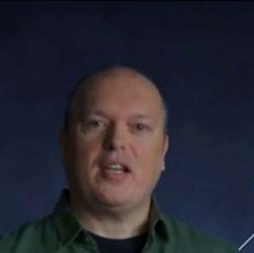
Sean Blakely is the Technical Director at American Eagle, leading large WordPress implementations and helping organizations scale their digital capabilities. Known for his calm leadership style and deep engineering expertise, he’s been part of the WordPress world for many years. Off the clock, Sean enjoys traveling and discovering new experiences — though never while debugging production issues.
Sorry, the comment form is closed at this time.